


Supports built to be worn, not just sold

Who we are
Bodymap is an orthopedic products brand. We design and supply supports, braces and compression garments for people managing everyday strain, recovering from an injury, or living with a condition that makes an ordinary day harder than it should be.
The work is unglamorous and detailed: a closure that holds without digging in, a size table that matches real bodies, a fabric that can be worn against skin for eight hours. That detail is the product. A support that is technically correct but uncomfortable gets left in a drawer, and a support in a drawer helps nobody.
Why classical statues
Our product photography places supports on classical sculpture rather than on models. That is a deliberate choice, and it is not decoration.
Classical sculpture is the oldest careful study of the human body we have: anatomy observed, understood and rendered with an attention that has not been improved on. Placing a modern support on that form says what we want said: this is a product about anatomy. It also sidesteps something we are uncomfortable with. Orthopedic marketing tends to show smiling models mid-activity, implying an outcome the product cannot promise. A statue makes no such promise. It shows the support, the body, and the relationship between them, which is all we can honestly show.
How the supports are built
Fit before force
Closures that stay put
Materials against skin
Movement you keep
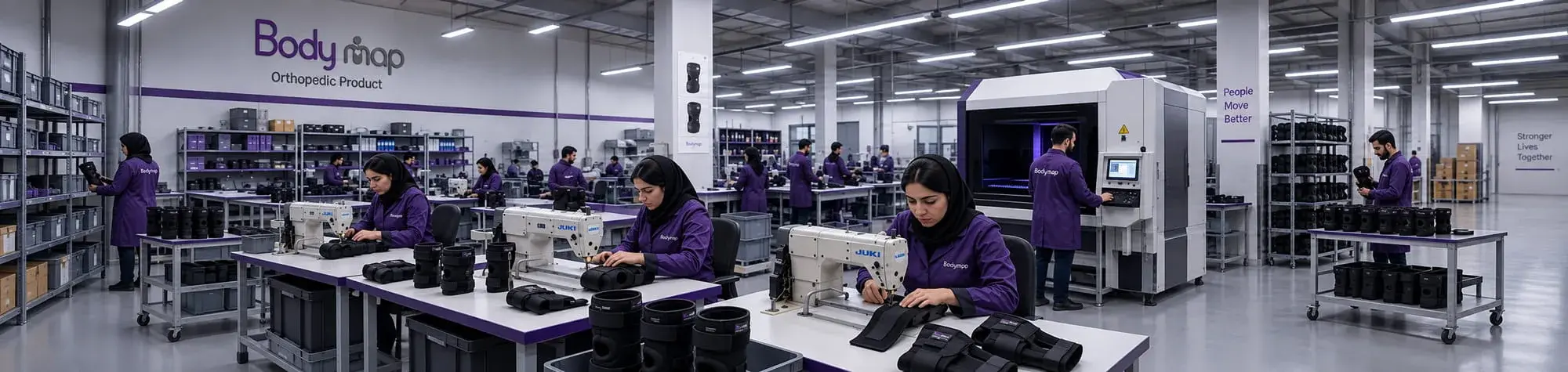
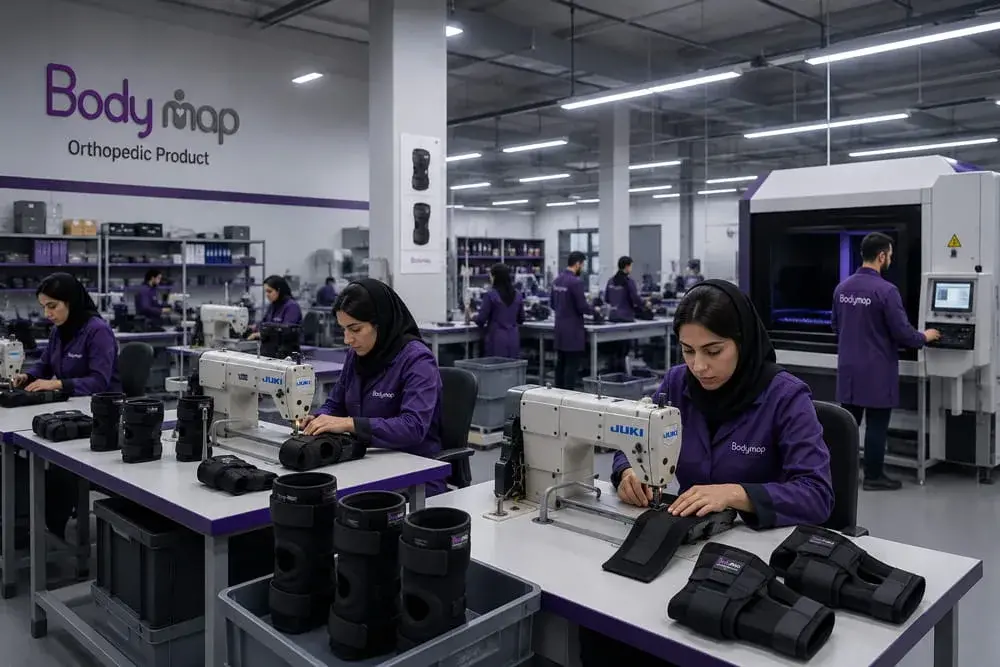
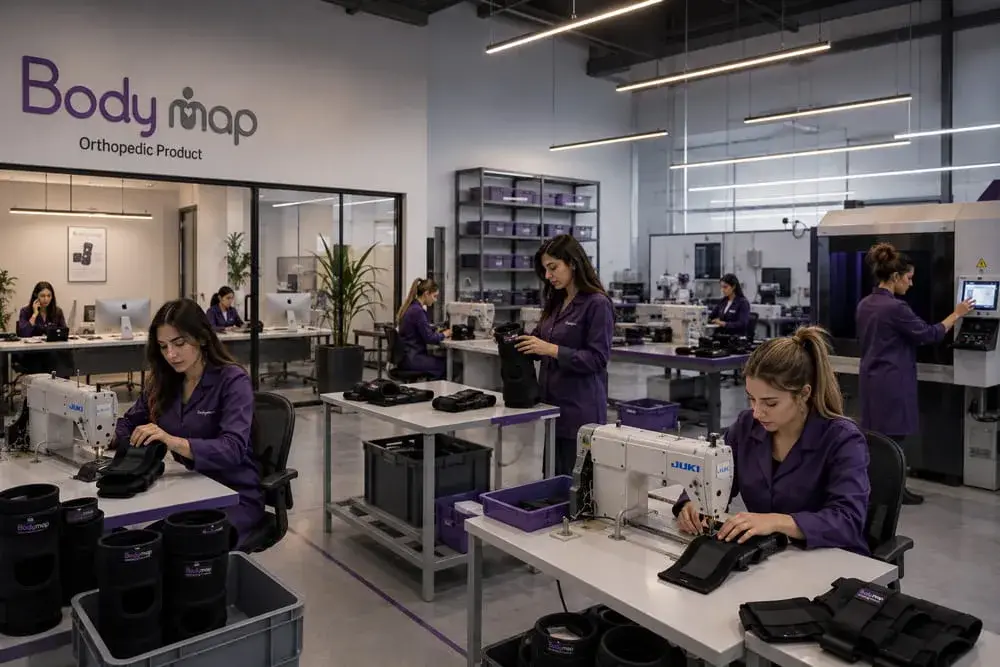
Quality management
Consistency is what separates a support you can rely on from one you cannot. A brace that fits well in one production run and poorly in the next is not a product, it is a gamble.
Bodymap operates within recognised quality-management frameworks, and the ISO 9001 and ISO 13485 marks shown in our catalogue refer to those management systems.

The range, head to toe
The catalogue is organised the way a body is: from the neck down. Cervical and chin supports, posture and arm supports, elbow, wrist and hand, lumbosacral and abdominal, knee, ankle, compression stockings, silicone footcare, and orthopedic cushions and pillows.
That order exists because it is how people actually search. You usually know where it hurts long before you know what the product is called, so the fastest route to the right support is the part of the body it belongs to. Every category page carries its own selection guide, because choosing a knee support and choosing compression stockings are not the same problem.
On fitting, and on advice
We publish size tables, measurement points and fitting notes on every product page, and we would rather you spent five minutes with a tape measure than guessed from your clothing size. Most disappointment with an orthopedic support traces back to the wrong size, not the wrong product.
There is a line we will not cross, though. Compression garments in particular should be selected and fitted with professional advice, and if you are recovering from surgery or an injury, or a clinician has specified a device for you, their instruction comes first. Nothing on this website replaces an assessment by someone who can examine you.
Questions we get asked
How do I know which size to order?
Every product page has a size table and tells you exactly where to measure, which is rarely where people assume. Measure with the tape level and comfortably close to the skin without compressing it, then compare against the table for that specific product. Sizes are not interchangeable between models.
Can I wear a support all day?
It depends on the product. Light sleeves are generally comfortable for a working day; firmer braces and belts are usually worn for the tasks that load the area rather than continuously. Each product page gives guidance for that model. Whatever you are wearing, check the skin underneath after a few hours.
Do your products treat the underlying condition?
No, and we will not claim otherwise. A support manages load, position and movement. That can make a real difference to comfort and to what you are able to do, but it is not a treatment for the condition causing the problem. For that, see a clinician.
What do the ISO marks in your catalogue mean?
ISO 9001 and ISO 13485 are quality-management system standards. They describe how the organisation runs its processes. They are not a certification of an individual product and should not be read as one.
How should I wash a support?
Close all fasteners first so the hooks do not catch the fabric, remove any stays or hinges the model allows, then hand wash in lukewarm water with a mild detergent and dry flat away from direct heat. No tumble drying, ironing, bleaching or dry cleaning. Each product page carries the instructions for that model.