
Lumbosacral & Abdominal Supports
Back braces, lumbar belts and abdominal binders
Lumbar and lumbosacral belts that support the lower back under load, and abdominal binders that apply even pressure across the abdomen.
Support across the middle
A lumbar belt works in two ways at once. It raises the pressure inside the abdomen, which helps the trunk carry load, and it limits the range of movement at the lower back, which discourages the bending and twisting that provokes pain. Wider lumbosacral models reach further down and hold more of the pelvis.
Abdominal binders have a different purpose: even, distributed pressure across the abdomen, usually for comfort and support rather than to restrict movement.
Narrow it down
Getting the fit right
A belt that fits sits on the waist with the lower edge over the hip bones rather than on the ribs, and stays there when you sit down and stand up. It should be firm enough to feel supported and loose enough to breathe normally and eat. If it rides up when you sit it is too high or too loose; if the ribs or hips become sore it is too tight.
Choosing the right one
Choosing a back or abdominal support
- Measure around the waist at the level where the belt will sit, standing normally and breathing out gently. Do not pull the tape tight.
- Check the height while sitting. Sit down before you decide: that is when a belt that is too tall will make itself known against the ribs or the top of the thighs.
- Fasten it while standing. Position it first, then tighten. A belt fastened while seated is almost always too loose once you stand up.
- Firm, not crushing. You should be able to breathe fully and eat comfortably. If the belt has secondary tension straps, use them to fine-tune rather than over-tightening the main closure.
If you are recovering from surgery or an injury, or you have been given a specific brace to wear, follow the instructions of the clinician who prescribed it. Nothing on this page replaces that advice.
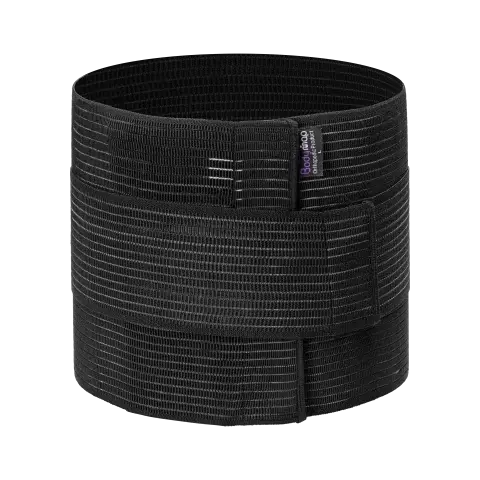
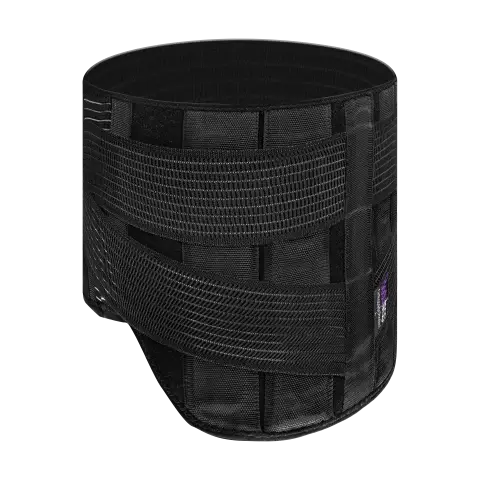
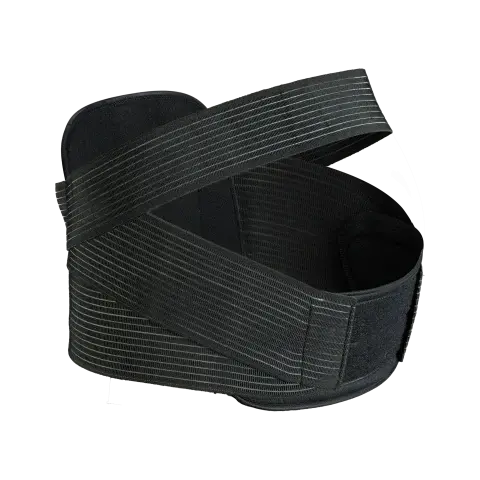
To see the differences, put Abdominal Support Belt (B01), Rigid Lumbosacral Support Belt (B10) and Maternity Back Support Belt (B20) side by side.

Care and safety
Common questions
Can I wear it directly against the skin?
A thin layer underneath is more comfortable and keeps the belt cleaner, particularly if you wear it for several hours.
Will it weaken my back?
Not when it is used for specific tasks. The concern applies to wearing a support continuously for months without doing anything else. Use it for the load, and keep moving otherwise.
Should I wear it while driving?
Many people find it helps on long drives. Fasten it before you get in, and check it is not riding up into the ribs once you are seated.
How long to wear a back support
Lumbar belts are usually worn for the parts of the day that load the back — lifting, driving, standing for long periods — rather than continuously. Worn all day every day, they let the trunk muscles do less work, which is the opposite of what most people need in the long run.
Take it off before sleeping unless you have specifically been told otherwise.
Supports for the neighbouring areas are gathered in Posture & Arm Supports and Orthopedic Cushions & Pillows.
Back and abdominal supports
Height matters as much as circumference. A belt that is too tall for a short torso will press into the ribs when you sit down; one that is too short will not reach the area you need supported.