
Ankle Supports
Ankle sleeves, stirrup braces and lace-up supports
Knitted ankle sleeves and adjustable ankle braces that limit the sideways movement most often involved in a sprain.
Steadying the ankle
Most ankle injuries happen sideways: the foot rolls inwards and the ligaments on the outside take the strain. An ankle support works by resisting that particular movement while leaving the up-and-down movement needed for walking reasonably free.
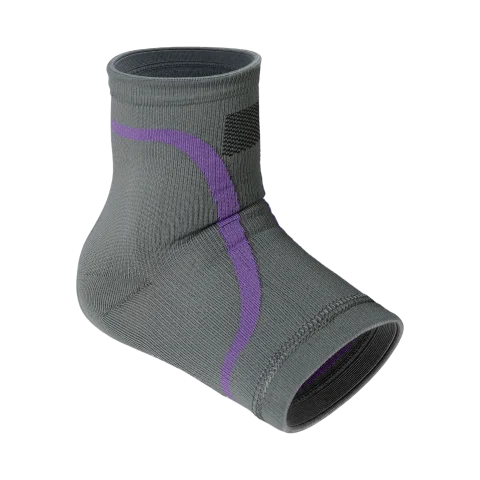
Knitted sleeves provide compression and proprioceptive feedback, which is a formal way of saying they help you feel where your ankle is. Strapped and lace-up models add mechanical resistance for people who need more than feedback.
Narrow it down
Getting the fit right
A support that fits sits above the ankle bones without pressing on them, and the heel stays seated when you stand and walk. You should be able to slide a finger under the edge. If the toes tingle, the foot feels cold or the skin marks deeply, it is too tight. If the support slides down inside the shoe or twists as you walk, it is too loose or the wrong size.
Choosing the right one
Choosing an ankle support
- Measure the ankle circumference at the narrowest point above the ankle bones, with the tape level and comfortably close to the skin.
- Try it with the shoe. This is the step people skip and regret. Put the support on, then put the shoe on, and check both still fit.
- Sleeve or strapped brace. A sleeve suits everyday aching, swelling and light activity. A strapped or lace-up brace suits an ankle that gives way or has a history of rolling.
- The heel must sit properly. If the heel is not seated in the support, nothing above it will hold.
If you are recovering from surgery or an injury, or you have been given a specific brace to wear, follow the instructions of the clinician who prescribed it. Nothing on this page replaces that advice.
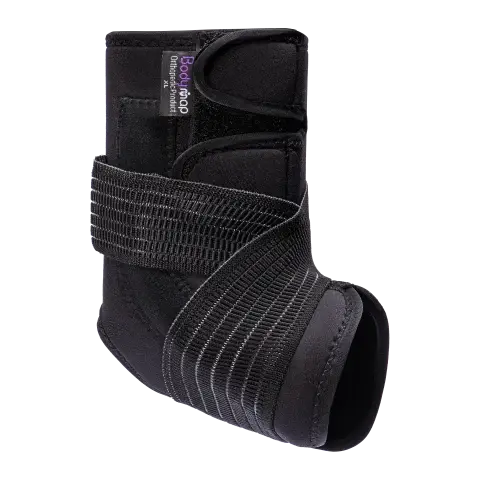
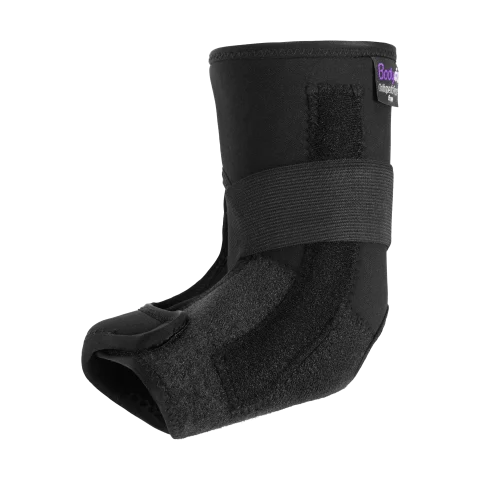
To see the differences, put Comfeel Ankle Support (A01), Elastic Ankle Support (A06) and Buckled Ankle Support (A05) side by side.

Care and safety
Common questions
Will it fit inside my shoe?
Low-profile knitted sleeves usually do. Models with straps or reinforcement need more room — try the support with the footwear you intend to use.
Can I wear it all day?
A light sleeve can be worn for the working day. Take it off in the evening and check the skin, particularly around the ankle bones.
Sock underneath or not?
A thin sock underneath is more comfortable, reduces rubbing and keeps the support cleaner.
After a sprain
An ankle that has been sprained once is more likely to be sprained again, largely because the sense of where the joint is takes longer to recover than the ligament itself. Many people use a support during sport for a period after returning, then reduce it as confidence and control come back.
If the ankle will not take your weight, or the pain and swelling are severe, that needs assessment rather than a support.
Supports for the neighbouring areas are gathered in Knee Supports and Compression Stockings.
Ankle supports
Consider the shoes you will wear it with. A low-profile sleeve fits inside most footwear; a strapped brace needs a shoe with enough room to close over it. The range runs from light knitted sleeves for everyday aching, through strapped models, to lace-up braces for an ankle that gives way. Sizing is taken above the ankle bones, not around the foot.