
Knee Supports
Knee sleeves, hinged braces and patellar supports
Knee supports from light elastic sleeves through patellar straps to hinged braces with adjustable range of motion.
From a light sleeve to a hinged brace
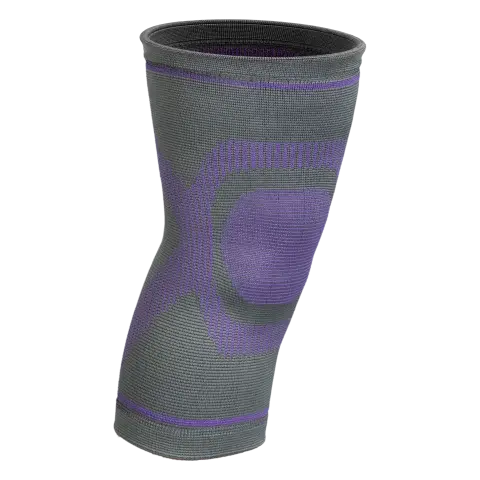
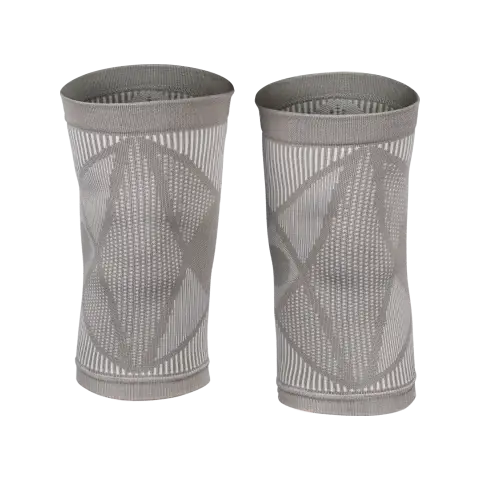
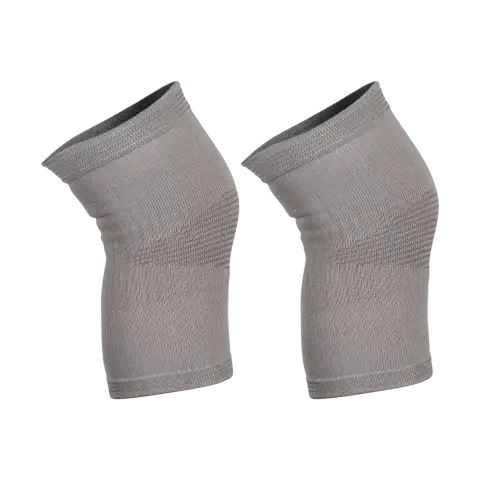
The knee is loaded every time you stand, walk or climb, and it is stabilised largely by soft tissue rather than by its own bony shape. That is why knee supports span such a wide range: a light elastic sleeve, which provides compression, warmth and a sense of where the joint is, sits at one end, and a hinged brace with adjustable stops sits at the other.
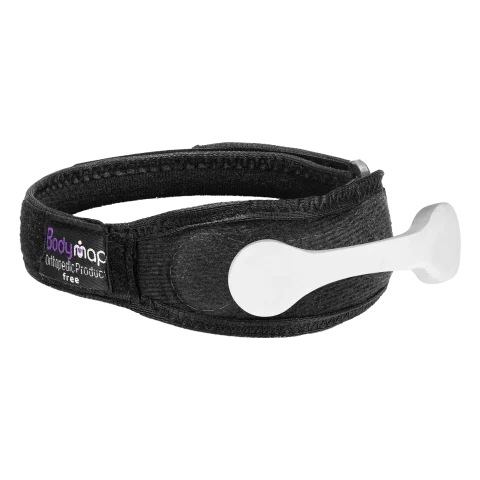
In between are patellar straps, which apply pressure below the kneecap, and open-patella sleeves, which relieve pressure over it.
Narrow it down
Getting the fit right
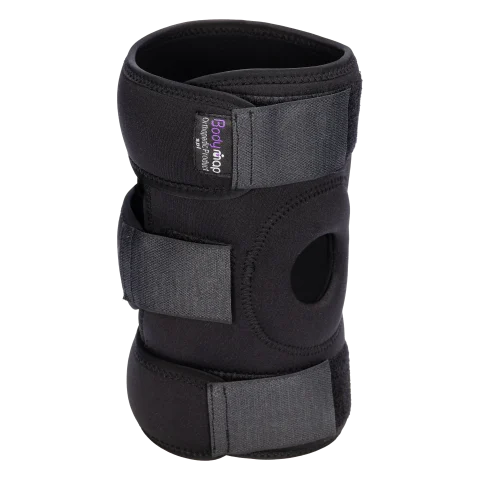
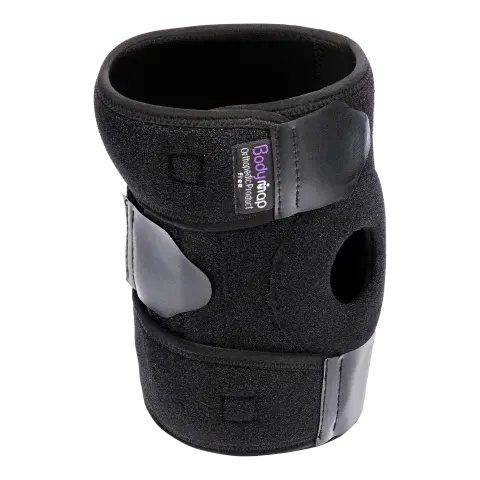
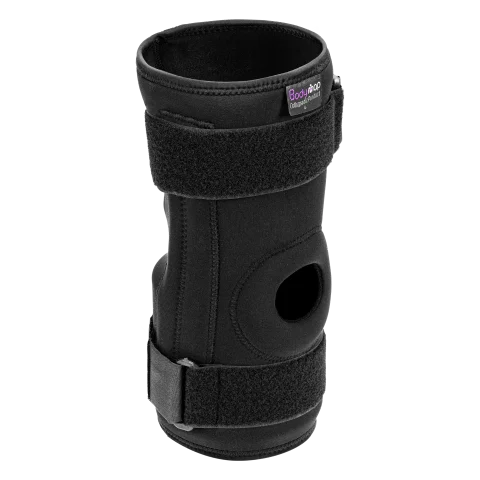
A support that fits keeps the kneecap opening centred when you stand, and stays centred when you sit, stand and take a few steps. You should be able to bend the knee fully without the top edge digging into the thigh. If it slides down after a few minutes it is too large; if it leaves a deep ring, marks the skin or makes the calf ache, it is too small.
Choosing the right one
Choosing a knee support
- Measure where the model tells you to. Some are sized around the middle of the kneecap, others above and below it. Using the wrong measurement is the most common reason a knee support arrives too big.
- Light sleeve for compression, warmth and everyday aching. Patellar strap for pain focused just below the kneecap. Open patella if pressure over the kneecap is what bothers you. Hinged brace when the joint needs side-to-side stability or a controlled range.
- It must not slide down. A sleeve that migrates while you walk is too large; one that leaves a deep ring at the thigh is too small.
- Hinges must line up with the joint. Fit a hinged brace with the knee slightly bent and check the hinge centre sits level with the knee, not above or below it.
If you are recovering from surgery or an injury, or you have been given a specific brace to wear, follow the instructions of the clinician who prescribed it. Nothing on this page replaces that advice.
To see the differences, put Patellar Tendon Strap (K01), Elastic Knitted Knee Support (K05), Neoprene Knee Wrap (K08) and Dual-Spring Knee Brace (K10) side by side.

Care and safety
Common questions
Can I run in a knee sleeve?
Light sleeves are commonly worn during activity. If pain increases while you run, that is a signal to stop and get it looked at, not to tighten the sleeve.
How do I stop it sliding down?
Usually the size is too large. Silicone bands help, but they cannot rescue a sleeve that is a size out. Measure again before assuming the design is at fault.
Should the kneecap show through the opening?
On an open-patella model, yes — the opening should sit around the kneecap, not on top of it or below it.
Wearing a knee support day to day
A sleeve can be worn for the whole of an activity and taken off afterwards. A hinged brace is usually worn for specific periods and specific tasks, and its range settings should only be changed if a clinician has told you what to set them to.
Check the skin behind the knee after wearing any support for several hours — that is the first place to show a problem.
Supports for the neighbouring areas are gathered in Ankle Supports and Compression Stockings.
Knee supports
The biggest range in the Bodymap catalogue. Work out first how much stability you need, because that decision narrows the list faster than anything else. From there the choice is between a pull-on sleeve, a strap that focuses pressure just below the kneecap, an open-patella model and a hinged brace. Measure around the middle of the kneecap before ordering.