
Elbow & Tennis Elbow Supports
Epicondylitis straps and elbow sleeves
Straps and sleeves for the elbow, including the forearm bands used for tennis and golfer’s elbow.
Where the forearm meets the elbow
Most elbow pain that brings people to a support is not in the joint itself but where the forearm muscles attach to the bony points on either side of it. Gripping, lifting and repetitive rotation load that attachment, and it becomes sore.
An epicondylitis strap sits on the forearm a little below the elbow and applies pressure across the muscle belly, changing where the pull is felt. An elbow sleeve works differently, providing even compression and warmth across the whole joint.
Narrow it down
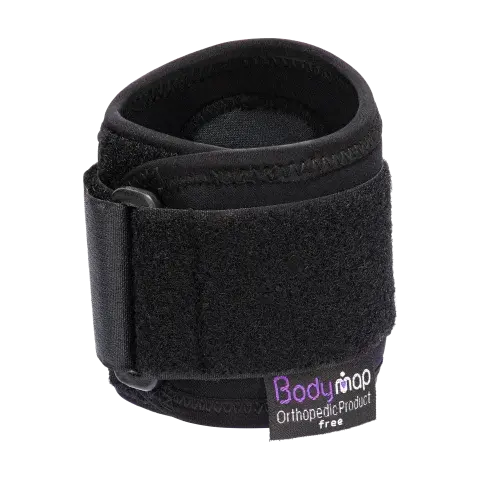
Getting the fit right
A band or sleeve that fits sits over the muscle rather than on the bone, and stays there when the arm is bent and straightened. A strap belongs a little below the elbow, over the muscle belly, firm enough to change what you feel when you grip but not so firm that the forearm aches or the fingers tingle.
Choosing the right one
Choosing an elbow support
- Straps are placed on the forearm, roughly two finger widths below the bony point of the elbow, on the side that hurts. Tighten while the muscle is relaxed, then make a fist to check it is not cutting in.
- Sleeves are sized by the circumference of the forearm just below the elbow. They should feel evenly snug with no ridge at either end.
- Pins and needles mean it is too tight. Loosen it. The forearm carries nerves close to the surface and they do not tolerate pressure well.
- The support does not remove the cause. If a particular grip or movement is what irritates it, changing that movement matters more than the strap.
If you are recovering from surgery or an injury, or you have been given a specific brace to wear, follow the instructions of the clinician who prescribed it. Nothing on this page replaces that advice.
This group has one model: Tennis Elbow Strap (W10).

Care and safety
Common questions
Which side does the pad go on?
On the painful side, over the muscle belly rather than over the bony point itself. If it sits on the bone it will hurt more, not less.
Can I wear it all day?
Continuous pressure on the forearm for many hours is not comfortable and is rarely necessary. Wear it for the activity, then take it off.
Strap or sleeve?
If you can point to one sore spot near the elbow, start with a strap. If the whole joint aches or feels unstable, a sleeve is the better fit.
Using an elbow strap during activity
Straps are usually worn during the activity that provokes the pain rather than all day. Put it on before you start, not after it already hurts, and take it off afterwards so the skin underneath can recover.
Supports for the neighbouring areas are gathered in Wrist, Hand & Thumb Supports and Posture & Arm Supports.
Elbow supports
A strap and a sleeve solve different problems. The strap targets a specific painful attachment point; the sleeve supports the joint as a whole.